

Table of Contents
Stop waiting for the perfect launch. Learn why your first 100 posts are actually data sensors designed to map your audience’s attention and how to turn “ugly” content into a high-ROAS paid engine.
Why Velocity Beats Perfection — and How to Build a Data-Driven Growth Engine One Ugly Post at a Time
You’ve been taxed. Not by the IRS — by your own standards. Every week you delay publishing because the lighting isn’t right, the caption isn’t clever enough, or the CEO hasn’t approved the color palette, you are writing a check to your competitors who are just posting.
This article isn’t about lowering your standards. It’s about understanding where standards actually matter — and where they’re an expensive illusion.
The 100 Post Strategy is a framework used by growth-focused SMB owners and performance marketers who’ve stopped waiting for the perfect launch and started building the only thing that actually produces results: a content data engine.
What is the 100 Post Strategy?
The core argument is simple: your first 100 posts are not content. They are sensors. Every publish is a probe sent into the algorithmic ocean to map the boundaries of your audience’s attention. And you can’t run that experiment on a sample size of six.
“In this strategy, you aren’t failing to go viral. You are successfully mapping the boundaries of your audience’s attention.”
What follows is the complete operating manual for building that data engine — the mechanics, the metrics that actually matter, the psychology traps to avoid, and the bridge that turns your best organic experiments into high-ROAS paid campaigns.
The Psychology of Early-Stage Content
The Perfectionism Trap
There is a well-documented cognitive distortion called the Spotlight Effect — the tendency to believe that other people are noticing and evaluating you far more than they actually are.
Most business owners have deeply internalized the idea that their content represents their brand — and therefore every post must be worthy of that brand. This belief is the single biggest killer of content momentum.
In the context of social media content, this bias is catastrophic. It convinces business owners that every post will be scrutinized, fact-checked, and judged by a waiting audience.
No One Is Going To See You Anyway
- The reality: your first 100 posts will be seen by almost no one.
- If you do get seen – great! The 100 post strategy just got truncated and you’re on the fast-path.
But…Compared to the visibility your brand needs, no one sees your first 100 posts.
Not because your content is bad.
Because that’s how platform distribution works. New accounts are sandboxed.
Algorithms don’t amplify what they haven’t yet classified. You are, effectively, posting in a room with the lights off — and that is your competitive advantage.
Reps Before Refinement
Think about any elite performer in their early career. LeBron James didn’t open the 2003 NBA season with a championship-caliber playbook.
He had reps. Thousands of them.
Ugly, uncoordinated, losing reps that taught him what elite looked like in practice. The same principle applies to a founder posting their first product demo or a marketing manager running their first short-form video campaign.
Early content must be disposable to be valuable. Its value is not in the impressions. Its value is in what it teaches you about your audience — data you can’t buy, borrow, or shortcut your way to.
The Myth of the Grand Debut
Every week, a business owner somewhere is putting the final touches on a content calendar that will never be published. They’re waiting for the brand photography, the professional voiceover, the signed-off content strategy.
Meanwhile, their competitor — the one with the phone tripod from Amazon and a Canva account — is six weeks into publishing and already has 40 data points.
Low Visibility Is a Gift
Here’s what the “wait for perfection” crowd fundamentally misunderstands: the beginning of any content program is the only time you get to experiment at essentially zero cost. Your audience is small. Your reach is limited. The algorithm hasn’t classified you yet. This is not a liability — it’s a laboratory.
The goal of the first 100 posts is not to build brand equity. It is to shift from fixed billboard to testing engine. A billboard says one thing to everyone. A testing engine learns what to say, to whom, and when — and then says it better every single time.
The Planning Trap
Over-planning in the early stage is not diligence. It is delay with better branding.
The navigator’s mindset — a flexible compass over a rigid map — is far more effective for content programs than a 90-day editorial calendar that was built before a single post was published.
A rigid plan assumes you know what your audience responds to. You don’t. Not yet. The data will tell you. But only if you let it accumulate.
Velocity Over Veracity — Building for Flux
What Velocity Actually Means
Velocity, in this context, is not ‘post as fast as possible.’ It is movement with intent — a publishing cadence sufficient to generate the data density required to make informed decisions. The difference between posting once a week and posting five times a week is not just a 5x multiplier in output. It is the difference between a 90-day feedback loop and an 18-day feedback loop.
When you compress your feedback loops, you compress your time to revenue. That is the economic case for velocity.
When you compress your feedback loops, you compress your time to revenue. That is the economic case for velocity.
Counter-Intuition: Over-Planning Is an Anchor
The instinct to plan more before publishing more is understandable — but it is precisely backwards.
Why is Over-Planning Bad for Results?
Every additional week you spend refining a strategy that has no empirical foundation is a week your competitors are collecting the data you need to build one.
Concept: Content Gravity
Content Gravity is real: the more you publish, the more the algorithm has to classify, amplify, and distribute. You can’t create gravity without mass.
This is the concept of Content Gravity: the accumulation of published content creates a gravitational pull that drives discoverability, audience retention, and ultimately, conversion.
Content Gravity cannot be manufactured by a single viral post or a high-production hero video. It is built — incrementally, consistently, imperfectly — one post at a time.
The Algorithm Reality Check
Here is something that algorithm explainers rarely tell you because it doesn’t make for an exciting carousel: platforms don’t know what to do with you until you give them enough data to figure it out.
Why 100 Posts Is the Magic Number?
One hundred posts is not an arbitrary threshold. It represents the approximate volume of content required for a platform’s classification system to move you from ‘unclassified’ to ‘targeted distribution.’ Before that threshold, your content is largely sandboxed — shown to a small, algorithmically undifferentiated pool to test engagement. After it, the platform has enough signal to know who your audience is and to serve your content accordingly.
This sandboxing is not punishment. It is protection.
You are being given permission to fail quietly, learn cheaply, and iterate without consequence. The SMBs that understand this publish freely. The ones that don’t publish sparingly — and wonder why nothing is working.
Early Posts Are Sandboxed — and That’s the Gift
The low-reach environment of your first 100 posts means your ‘worst’ content is seen by the fewest people. As your classification improves and your distribution expands, your content quality will have improved in lockstep — because you will have had 100 experiments worth of feedback telling you exactly what to improve.

Priming the Pump
100 Post Strategy Principle: Don’t Waste Good Water on a Dry Pump
If you’ve ever used an old hand-pump well, you know the process: before you can draw good water, you have to pour a small amount of water in to create the suction that gets the pump working. That priming water isn’t wasted — it’s the cost of access to the good water below.
The same principle applies to your content program. Your high-production assets — the professional studio shoot, the polished brand video, the agency-produced campaign — are your ‘good water.’ Deploying them before you understand what your audience responds to is the equivalent of pouring good water into a dry pump in a field. It doesn’t draw anything up. It just disappears into the ground.
The Inaction Cost
Business owners often frame the choice as ‘post imperfectly now or post perfectly later.’ The correct framing is: ‘pay nothing to learn now, or pay your agency’s day rate to guess later.’ Every week of inaction is not neutral. It has a real cost — lost first-party data, lost classification signals, lost compounding distribution.
Ashley Furniture, Simpli Home, and dozens of direct-to-consumer brands have proven that low-production content — simple panning shots, product-on-white backgrounds, founder talking-head videos — outperforms high-production brand content in conversion metrics because it is authentic, frequent, and iterative.

Real-World Examples of Ugly → Effective
You don’t have to take this on faith. The case studies are everywhere:
Duolingo
Duolingo’s early TikTok content was, by any professional content standard, chaotic. Unscripted, lo-fi, and weird. It was also algorithmically explosive. Why? Because it published constantly, iterated based on engagement, and optimized for platform-native behavior rather than brand-safe production value.
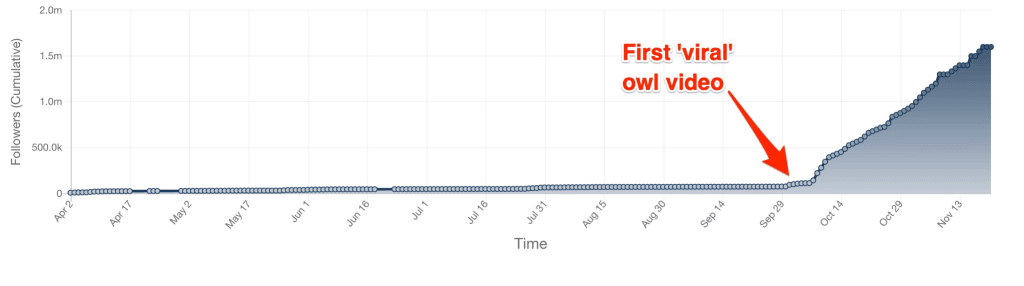
The result was a content flywheel that cost a fraction of a traditional campaign and generated millions of earned impressions.

@duolingo day 1 of recreating #heatedrivalry scenes until Hudson and Connor let me send them these custom plushies 👉👈 @Heated Rivalry #connorstorrie #hudsonwilliams #hollanov ♬ Heated Rivalry Coming to the Cottage – HBO Max
It’s not uncommon for Duolingo’s videos to get 200k views, with this one sitting at over a million as of 3/12/2026.
Gymshark
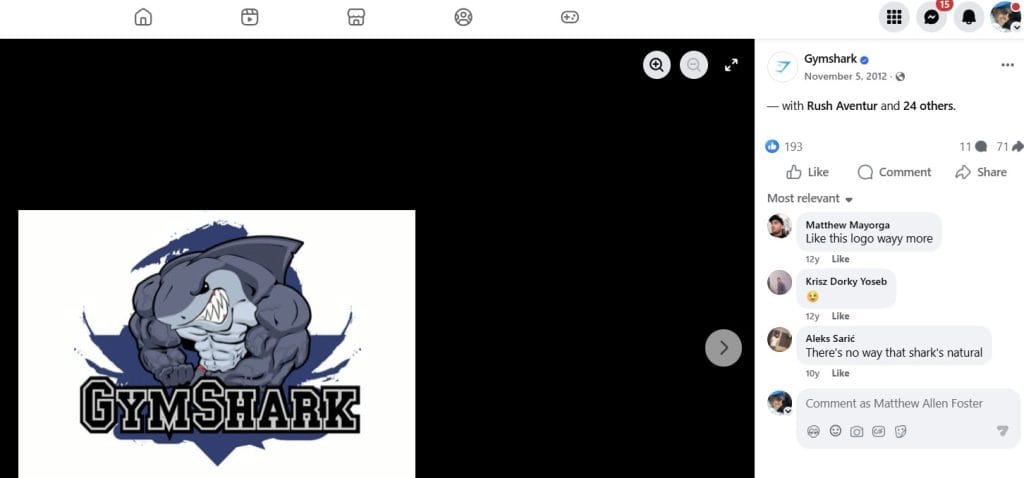
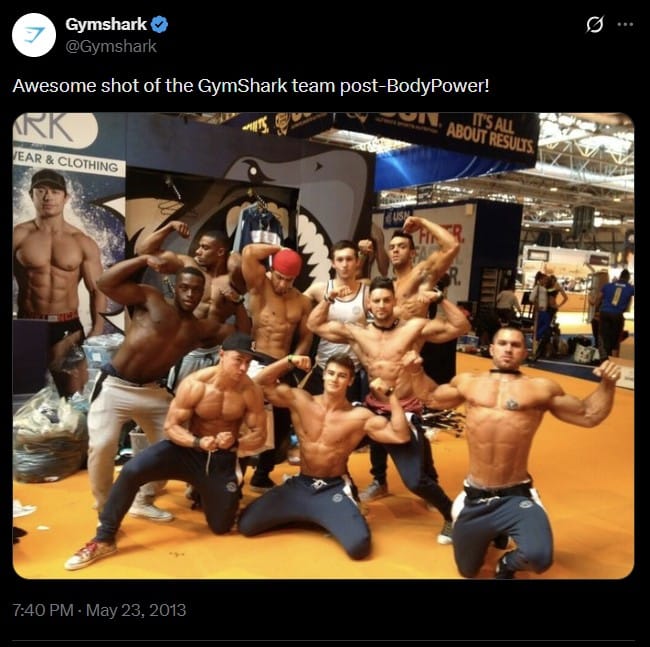
Gymshark’s early Instagram presence was built almost entirely on mirror selfies and user-generated content. No creative director. No agency. Just consistent, high-frequency content that told the platform exactly who their audience was — and then scaled that signal into paid amplification.
MrBeast
Before Jimmy Donaldson became the most-subscribed individual on YouTube, he published over 100 videos to a virtually non-existent audience. He called this period his ‘learning phase.’
Every video was an experiment. None of it was designed to go viral. All of it was designed to teach him what worked.
The pattern is consistent: volume precedes virality. Data precedes creative excellence. Ugly precedes effective.
Volume precedes virality. Ugly precedes effective.
The Mechanics of the 100 Post Strategy
The 100 Post Strategy is divided into three distinct phases, each with a specific objective, tactical toolkit, and success metric.
Phase 1: The Volume Phase (Posts 1–30)
Primary Objective: Overcome publish-button friction.
The biggest obstacle at this stage is not strategy. It is psychology. Most business owners have deeply internalized the idea that their content represents their brand — and therefore every post must be worthy of that brand. This belief is the single biggest killer of content momentum.
In Phase 1, the only metric that matters is whether you hit publish. Not reach. Not engagement. Publish.
Tactical toolkit for Phase 1:
- Repurpose existing assets: product photos, testimonials, FAQ responses
- Static images with bold text overlays (Canva or equivalent)
- Founder or team talking-head videos, shot on a smartphone
- AI-assisted caption drafts to reduce writing friction
- Before/after and process photos that require zero scripting
Phase 2: The Feedback Loop (Posts 31–70)
Primary Objective: Identify winners and losers.
By post 31, you have enough data to begin making informed decisions. Not data about what your audience says they want — data about what they actually do.
The metrics that matter here are behavioral, not emotional:
- Scroll depth: Are people stopping on your content or scrolling past?
- Profile visits: Is your content generating enough curiosity to drive discovery?
- Link clicks and Add to Cart rates: Is your MOFU content creating BOFU behavior?
- Saves: The highest-intent metric — saves indicate content worth returning to.
- View-Through Conversions: Track in GA4 to connect organic content to site-level revenue actions.
Phase 3: The Machine Phase (Posts 71–100)
Primary Objective: Scale what works. Begin the transition to paid.
Phase 3 is where the content program begins to generate a measurable return. You now have a library of tested creative — posts with demonstrated engagement signals — and a clear picture of the content archetypes that resonate with your audience. The shift at this stage is from MOFU engagement to BOFU revenue campaigns.
The Machine Phase is where your organic content becomes R&D for your paid media program. The top 5% of your organic posts — identified by the behavioral metrics above — become the creative foundation for Meta and Google ad campaigns.
You’re not guessing what will work.
You already know.
Content Archetypes That Work in the First 100 Posts
Not all content formats are created equal for early-stage programs. These six archetypes consistently perform across industries and platforms:
| Archetype | Format | Business Outcome |
|---|---|---|
| Teach One Thing | Short-form video, carousel | Builds authority, reduces CAC |
| Show the Process | Behind-the-scenes, time-lapse | Increases trust and purchase intent |
| Before / After | Static image, split-screen reel | Strongest BOFU conversion driver |
| Myth vs. Reality | Talking head, text post | Differentiates from competitors |
| Customer POV | UGC, repurposed reviews | Lowers CAC via social proof |
| Unpolished Founder Voice | Raw talking head, phone video | Humanizes brand, drives DM leads |
Failing Your Way to a System
Let’s be direct about something: the majority of your first 100 posts will not perform. They will not go viral. They will not generate leads. They will not make your creative director proud. And that is precisely the point.
Every Failed Post Is a Data Point
In the world of direct response advertising, this is called creative testing — and it’s standard practice for brands spending millions on paid media. The difference is that those brands pay Meta or Google to run their tests. You are running your tests for free, on owned channels, with zero media spend.
The compound math is striking: 100 experiments generate a predictable machine. If just 10% of your posts produce above-average engagement signals, you’ve identified 10 high-potential creative directions. Scale those 10 into paid campaigns and you have a dramatically lower CAC than any brand that went directly from strategy deck to ad spend.
“It’s cheaper to fail organically than to pay Google or Meta to discover your creative winners.”
The Real Cost of the Cautious Approach
Consider two SMBs starting social media programs on the same day.
- Business A publishes once a week, highly polished, maximum scrutiny.
- Business B publishes five times a week, imperfectly, with a feedback-loop mindset.
At the end of 20 weeks:
- Business A has 20 posts and no statistical basis for any creative decision.
- Business B has 100 posts, a classification-ready algorithm profile, and 10 validated creative templates ready for paid amplification.
Which business has a lower CAC going into their next ad campaign?
The math answers itself.
The Metrics That Actually Matter
The single biggest mistake SMBs make when evaluating their content program is optimizing for vanity metrics.
Likes are dopamine.
Profile growth is ego.
Neither of them has a line on your P&L.
What Social Media Metrics are Important?
Track These Metrics in your 100 Post Strategy:
- Scroll depth: Indicates whether your content stops the thumb. Essential for diagnosing creative hooks.
- Time on post / video completion rate: Measures content quality and audience relevance.
- Link clicks: Direct intent signal. The clearest path between content and conversion.
- Profile visits: Indicates content is generating curiosity beyond the post itself.
- Saves: The highest-intent organic signal. People save what they intend to use.
- DM replies: Qualitative signal of resonance. Often the origin of a sales conversation.
- Add to Cart / View-Through Conversions (GA4): The revenue bridge — tracks site behavior attributable to content exposure.
What Social Media Metrics Should I Ignore?
Ignore These Metrics in your 100 Post Strategy:
- Likes: Weakest intent signal. Highly influenced by time of day, hashtags, and follow-back behavior.
- Follower count: A lagging indicator that tells you where you were, not where you’re going.
- View count: Volume without context. A post with 10,000 views and zero link clicks is a vanity metric with extra steps.
The Signal-to-Noise Ratio framework applies here directly: if you are tracking metrics that don’t connect to revenue outcomes (CAC, ROAS, Lead Volume), you are measuring noise.
The first 100 posts are about increasing the signal — behavioral data that tells you exactly what to put money behind.
The 100 Post Operating System
Strategy without a system is just intention. Here is the operational framework for executing the 100 Post Strategy without burning out your team or your creative budget.
Weekly Cadence
- Monday: Plan the week’s posts (30 minutes). Use the archetype table above. Assign one archetype per post.
- Tuesday–Thursday: Create and schedule. Aim for 3–5 posts per week. Batch content on one creation day if possible.
- Friday: Review the week’s analytics. Document wins and losers. Identify scroll-depth and save-rate standouts.
- Weekend: Rest. Seriously. Burnout is the number one reason content programs die at post 30.
The 30-Minute Daily Routine
- 10 minutes: Review previous day’s performance metrics (not likes — scroll depth, saves, clicks)
- 10 minutes: Create or refine one piece of content using an existing archetype
- 10 minutes: Engage with comments, DMs, and audience responses (this feeds the algorithm’s engagement signals)
The Velocity vs. Friction Diagnostic Table
Use this table to diagnose what’s blocking your publishing cadence and apply the appropriate 100 Post cure:
| Barrier | Symptom | The 100 Post Cure |
|---|---|---|
| Production Friction | “We need a videographer before we start.” | Use animated product images or Ashley Furniture-style panning technique on a smartphone. |
| Approval Friction | “The CEO reviews every caption.” | Implement the 80% Good Enough Rule: pre-approve 50 posts using archetype templates and a single review session. |
| Data Friction | “We don’t know what’s working.” | Set up GA4 View-Through Conversions + scroll-depth tracking. Review weekly — not daily. |
| Strategy Friction | “We need to nail down the brand voice first.” | Brand voice is discovered through publishing, not planning. Start with Unpolished Founder Voice archetype. |
| Perfectionism Friction | “This post isn’t good enough to represent us.” | Remember: low-reach sandbox means almost no one will see it. Publish anyway. That’s the point. |
“What to Post When You Don’t Know What to Post” Checklist
- Answer one question a customer asked you this week
- Show a behind-the-scenes moment from your production or service delivery
- Take a screenshot of a positive customer review and add a one-line caption
- Record a 30-second ‘myth vs. reality’ about your industry
- Post a before/after of any project, product, or transformation
When to Break the 100 Post Rule
The 100 Post Strategy is not a religious doctrine. There are legitimate scenarios where a business can skip the early-phase experimentation model:
- Existing high-performing ad library: If you have proven creative from previous paid campaigns, you already have the data the first 100 posts are designed to generate.
- Repurposing long-form content: If you have a podcast, a YouTube channel, or a blog with documented engagement data, your content archetypes are already mapped.
- Launching a BOFU offer with proven demand: If you’re running a promotion on a product with established conversion data, you can go straight to paid amplification.
- Strong email list to seed engagement: If you have a large, engaged email list, you can seed early posts with an engagement boost that compresses the classification timeline.
If none of the above apply, you are in the 100 Post window.
Start the clock.
The Hidden ROI of the 100 Post Strategy
Here is the business case, laid out cleanly:
How Can I Reduce CAC on Social Media?
The 100 Post Strategy Reduces CAC Through Creative Learning.
When you enter paid media with 10 validated creative templates derived from organic testing, your ad creative iteration cycle is dramatically shorter. Most brands running cold paid campaigns spend 60–80% of their first-month ad budget on creative that doesn’t convert. The 100 Post Strategy eliminates most of that waste.
Does Organic Social Media Lead to Better Advertising?
The 100 Post Strategy Leads to Faster Ad Optimization
Meta and Google’s ad algorithms optimize faster when they have more data to work with. Organic content creates a content corpus that primes the algorithm before a dollar of ad spend is deployed. The result is a faster path to algorithmic learning phase completion and a lower minimum effective frequency to drive conversion.
Should I Produce High-Quality or Low-Quality Social Content?
Lower Production Costs Often Gets Better Results.
High-frequency publishing incentivizes lo-fi formats — which are not only cheaper to produce, but frequently outperform high-production content in direct response contexts. This creates a structural cost advantage that compounds over time.
What If Competitors Product Better Social Content Than My Business?
Speed is the Accelerator – Velocity as an Economic Advantage
The ultimate argument for the 100 Post Strategy is competitive: the business that reaches the data threshold first wins. They win because they know their audience. They know their creative. They know their funnel. And they’ve learned all of it at a fraction of the cost of a brand that went straight to agency-produced paid campaigns.
Your organic content is R&D. Your paid media is manufacturing. Don’t build a factory before you’ve validated the product.
The Signal-to-Noise Framework — The Statistical Defense
For the performance marketers in the room who need a data-backed argument to present to skeptical clients: here it is.
The Concept: Your First 100 Posts Are Sensors
In signal processing, the Signal-to-Noise Ratio (SNR) is the measure of the desired signal relative to background noise. In content marketing, your ‘signal’ is the behavioral data that indicates genuine purchase intent — scroll stops, saves, clicks, Add to Cart events. Your ‘noise’ is everything else: the likes, the random views, the follows from bots.
For your SNR to be statistically meaningful, you need volume. You cannot calculate a reliable conversion rate from three posts. You cannot identify a creative winner from a cohort of six. The math requires sample size — and the 100 Post threshold is where that sample size becomes actionable.
Why Statistical Significance Requires Volume
In A/B testing frameworks, statistical significance is typically calculated at a 95% confidence threshold, requiring a minimum of 100–300 data points per variant. Your organic content posts are variants. Each one tests a different combination of hook, format, archetype, and call to action. You are running a multivariate creative test — and you need 100 posts to generate the data density required to read the results with confidence.
| Posts Published | Signal Clarity | Decision Quality |
|---|---|---|
| 1–10 | Noise — no pattern visible | Guesswork |
| 11–30 | Weak signal — directional only | Informed hypothesis |
| 31–70 | Moderate signal — trends emerging | Testable creative decisions |
| 71–100 | Strong signal — patterns confirmed | Scalable paid creative foundation |
| 100+ | High-confidence signal | Full paid amplification ready |
The Ad-Ready Audit — The Revenue Bridge
This is where the 100 Post Strategy pays its biggest dividend. At the conclusion of your first 100 posts, you conduct an Ad-Ready Audit: a systematic review of your organic content library to identify the top 5% of posts — by behavioral metrics — and prepare them for paid amplification.
Need Help?
How to Identify Ad-Ready Creative
View-Through Conversions in GA4: The gold standard. Any organic content traceable to a downstream site action is already functioning as a paid ad — without the spend.
The Economic Logic
The transfer from organic to paid is not just a tactical move — it is a structural cost advantage. Meta and Google charge you to discover what your audience responds to.
The 100 Post Strategy means you’ve already paid that tuition — in time and lo-fi production costs, rather than CPMs. When you enter the paid ecosystem with validated creative, your ROAS from day one is structurally higher than any competitor who skipped the organic learning phase.
The Challenge: Start Your Clock Today
Here is the only action item that matters after reading this article:
- Publish your first post today.
- Not next Monday. Not after the brand refresh. Not when the videographer is available.
- Today.
It does not have to be good. It does not have to be on-brand. It just has to exist — because post one is the only path to post 100, and post 100 is where the data engine turns on.
Tag your posts #100PostStrategy and track your progress. Build your first data engine.
Stop planning the perfect post.
Start the clock.


Leave a Reply to Chris BoganCancel reply